Tuesday, 11 October 2011

Kayseri: Portrait of an Anatolian Tiger Town

I am not sure if it is appropriate to call Kayseri a metropole. Why? Because in spite of Kayseri's 900,000 strong population and its undisputed status as one of the most important industrial cities in Central Anatolia, the whole place still feels and behaves like a provincial town at best. This deep-seated feeling of provincialism is evident as soon as you get off the bus or the tram in downtown Kayseri. There are no trendy cafes and bars, no designer shops, no art galleries, no international restaurants, no elegant boutique hotels, but plenty of uninspiring grey concrete apartment blocks and dusty-looking shop houses. To be brutally honest, this city does not appear attractive at the very first sight.


It is hardly surprising there is a lack of cosmopolitan trendy buildings in Kayseri, as the city is very well-known in Turkey for its social and religious conservatism. In other words, it is the place to visit if you are into mosques and other Muslim religious sites. Just hold your breathe and don't expect to come across any avant-garde or revolutionary architectures while you are there.

Saturday, 24 September 2011

Luxembourg Ville: Possibly One of the Most Boring Capital Cities in the World

Luxembourg city is undoubtedly one of the richest and most expensive capital cities in Europe, but it also has the dubious honour of being in contention for the title of the Most Boring City on Earth. In spite of all the grand architecture, the overflowing evidence of wealth, and the sight of its impressive Medieval Fortifications and Old Town - both are inscripted UNESCO World Heritage site - Luxembourg is by all means a rather dour, not-very-exciting place.


The moment you step out of Luxembourg's main train station, you know you are in a French sphere of influence. The style of buildings in downtown Luxembourg are fairly typical of cities in Northern France, albeit with slightly less greyness.


Wednesday, 14 September 2011

Cafe Bristol, Corfu: Beautiful Cafe in the Heart of Corfu

Like many of its Mediterranean neighbours, the Greeks take their daily cup of coffee very seriously. One of the best things about travelling around Greece is that it is never difficult to come across good cafes no matter where you are, and the quality of the espresso or latte are on par with those available in Italy itself, especially in those parts of the country which had been under Italian influence for centuries.


Being one of the major cultural centres on the crossroad between Italy, the Greek mainland, and the Adriatic Sea, the beautiful medieval city of Corfu Town is well-known for its well-preserved old town centre, delicious Italian ice-creams, and its abundance of beautiful Italian-style cafes. Take a walk around Corfu's scenic waterfront and its picturesque old town centre, and you will be enchanted by its array of coffee houses. Cafes in Corfu Town have a wide range of characteristics: modest roadside take-away coffee places alongside busy throughfares, traditional neighbourhood cafe+sandwich bars, serene mini-cafes tucked away in the myriad of narrow alleys and lanes of the old town, with their trademark colourful tables and chairs and frequented by students and younger people, stylish trendy boutique cafes with colourful decors and modernist interior designs, or classical grand cafes along the Liston with timeless appeal and an enduring sense of elegance. 


Tuesday, 10 May 2011

Alanya Revisited: The Undisputed Capital of Beach Holiday in Turkey

Alanya is probably the most famous beach resort in the whole of Turkey. Once an important port and strategic point of defence at the foot of the mighty Taurus Mountains, the town faced seemingly terminal decline throughout the mid-17th, 18th and the 19th centuries following the conquest of Cyprus and the pacification of the Anatolian mainland. The population exchange following the Treaty of Lausanne in 1922 dealt a further blow to the future of this town, as Alanya's prosperous Greek population was forced to resettle in mainland Greece.


Since the onset of tourism operations at this part of Turkey during the 1980s, however, Alanya has experienced a huge revival in its fortunes. The opening of Antalya airport to international air traffics in the late 1990s further helps to boost the number of foreign tourists arriving at Alanya. Nowadays tourism is the most important income-generating sector, accounting for more than 1.1bn Euros in 2009, according to one industry analysis. With the exponential growth of the tourism industry, the population of Alanya also expanded at a breakneck pace, from less than 100,000 in the mid-1980s, to almost 400,000 in the early 21st century. The booming seaside resort has attracted a huge following amongst expatriates from continential Europe seeking a more agreeable sunny climate. Alanya (in conjunction with the surrounding districts) is now home to more than 17000 foreign expatriates who choose to buy a property here and settle down in Alanya. During the summer peak seasons, the influx of tourists and seasonal workers engaged in the tourism sector push the population to over 1 million in certain parts of the year.

Dubbed the town with possibly the largest German/Nordic population in the whole of Turkey, what are the draws of Alanya?


Thursday, 14 April 2011

Cafe Delice, Ermoupolis, Syros: Nice Art Cafe on a Lively Island

Actually I find Ermoupolis, the main town of the island of Syros, quite a nice place to visit if you are en route to one of the Cyclades Islands and are looking for a good place to hang out with your friends on weekends, or do some decent fashion or household shoppings. It makes a refreshing change to shop around downtown Ermoupolis, because most of the shops are selling stuffs truly needed by normal people in everyday life, not just some unless fancy souveniors that fills most of the shop spaces in touristic islands such as Santorini or Mykonos. 


Tucked away in a quiet side street in downtown Ermoupolis, I came across this quaint little gallery-internet cafe while looking for a place to rest my feet after a few hours' window shopping in the city centre.

Friday, 1 April 2011

Hotel & Restaurant Club Caravanserail, Kusadasi: Original Boutique Hotel in the Heart of Kusadasi

To be honest I am not a huge fan of Kusadasi. For me it embodies some of the worst aspects of summer bazaar tourism in Turkey - pushy salesperson, countless shops without much soul or character, all selling counterfeit designer footwears, T-shirts and fake Made-in-China Gucci bags, and over-priced carpet and jewellery shops. For that reason I had had a rather unfavourable impression of this seaside resort town.


Last year I had to stop at Kusadasi for one day, and  I was at first reluctant to do so until someone recommended this boutique hotel to me. It is a small hotel located just 100 meter away from Kusadasi's international ferry terminal, where ferries connecting Kusadasi with Samos arrive and depart on a daily basis during the summer months.


The hotel Club Caravanserail turns out to be quite a relevation. It is housed in the original building of a former caravansaray (Kervansarayi) built by Okuz Mehmet Pasa in 1618. There is at least one such 'han' or inn in many turkish towns located on the major trade routes, and many of them have now been converted into trendy boutique hotels and restaurants. It has become a kind of passion of mine to visit each and every of these former caravansarays and stay overnight on the premises if the budget allows. The rooms of such caravansaray are usually quite elegantly decorated, with heavy wooden antique furnitures, carpets with classical motifs, and other artifacts from the Ottoman times. It is certainly much more interesting to stay in such a place with a continuous heritage than one of those modern concrete-steel-and-glass high rise blocks of hotels and holiday flats.


Monday, 28 March 2011

Kadikoy, Istanbul: Auf der anderen Seite

First-time visitors to Istanbul often choose to stay in the tourist enclaves of Sultanahmet and Sirkeci, or the trendy shopping districts of Taksim and Besiktas, as these areas are packed with famous sights and are full of accommodations catering to all kinds of clientele. Only those who are relatively familiar with this huge metropole would consider to stay overnight on the Asian side of the Bosphorus. Due to the popularity of Sabiha Gokcen airport as a hub for international budget carriers flying from Europe to Istanbul, Kadikoy is now becoming an increasingly trendy place for travellers to stay at during their time in Istanbul.  


Actually, Kadikoy is a very interesting district and is certainly worth a visit in its own right. Its streets are lined with beautiful nineteenth century wooden bunglows, graceful grand mansions with hidden courtyards and gardens, while in the side lanes one will find plenty of chic, fashionable cafes, wine bars (known as meyhane in Turkish) and al fresco restaurants specialising in fish dishes and high-end Turkish cuisines. The elegant  art deco building of the Süreyya Operası (pictured above), built in 1924, acts as the centre of Kadikoy's cultural scene.


Saturday, 19 March 2011

La Bodegueta, Valencia

One thing I came to realise after all these years of travel is, sometimes it really takes a bit of  luck and lots of instinct for any travellers to come across a place that serves authentic reional cuisines at reasonable prices. Although I sometimes do allow myself the luxury of having a proper meal at a renown restaurant (such as one of those honoured by the venerable Michelin guide), in general I am that sort of person who prefers to venture out into places where no tourists would frequent and try out whatever places that catch my attention.


Sometimes I came away from a city empty-handed, without having found anything which really impressed me. But then again, there are some places on earth that just seem to deliver a non-stop supply of such  rustic yet charming unknown little places with lots of local flavour.
Although Valencia is not very well-known outside of Europe as a top culinary destination, the city has an abundance of nice interesting little places all over the town, there is no shortage of decent foods wherever you go.


A golden rule of the thumb is, no matter which country you find yourself in, decent bistros almost always seem to congregate near where the university students are. There are several universities and institutes of higher educations in Valenica, and the area where I stayed at in the first week is full of cheap student and neighbourhood eateries offering delicious food and tapas for a few euros.

Wednesday, 16 March 2011

Barrio del Carmen, Valencia

I returned to visit Valencia once more after an absence of several years, and lots have changed in the city - for the better. This vibrant seaside city now has an efficient public transport system, lots of cultural and entertainment facilities, plenty of wonderful eating-places and restaurants, and after staying for one week in a newer neighbourhood in the university district of Valencia, I decided to prolong my stay and move to a more traditional part of town, within walking distance to Valencia's old medieval quarters and the city's beautiful botanical garden.


The monument of Torres de Quart, part of Valencia's medieval city walls and fortification system, is just a few minutes' walk from my rental flat. Once through the gate, you will find yourself  in the district of Barrio del Carmen, surrounded by medival churches, narrow streets, older buildings and lots of nice little tapas bars and restaurants.


During the day, this district might appear to some as somewhat quiet, although it has a very high concentration of resturants, cafes and bars. It is however famous for its night life, and as soon as the sun goes down, the streets and alleys of this part of Valencia immediately come into life.


Monday, 14 March 2011

Let's Pray for the People of Japan!!


Thursday, 10 March 2011

Illy Caffe in Valencia (2): L'Espresso @ Calle de la Paz

As said, there are several L'espresso cafe bars in Valencia, and this one on the busy shopping street of Calle de la Paz is a nice place to have a coffee break in the afternoon if you happen to be around the corner.


I like this place because of its large windows which offer plenty of natural lights into the cafe. Also the slightly dingy warmth of the ceiling lights offer a touch of radiance and intimacy to the whole interior. It seems like a good place for some serious discussions and small-talks.


Nice Little Places in Barrio del Carmen, Valencia: Taverna Cavallers

This little tavern is located on Calle Caballeros, near Valencia's medieval cathedral. I passed by this place in the afternoon, and decided to have a look that evening after dinner.


It is a small tapas bar which serves cold snacks, seafood tapas and other side dishes to go with wines and drinks. Since I am not fond of any seafood or fish, and my favourite artichoke tapas were not available, I settled for a cup of hot tea instead.


Wednesday, 9 March 2011

Nice Little Places in Barrio del Carmen, Valencia: Cafe y Bar Sant Jaume

There are many nice little places in Barrio del Carmen, and I came across this beautiful little cafe while on the way from Torres de Quart to the Cathedral of Valencia. The place is very small, less than a few square meters in total, but has a very original and authentic atmosphere.


As there are only two tables inside, most customers choose to have their drinks outside the bar underneath the trees instead. It seems this little place used to be a pharmacy of some sort, as the word 'pharmacy' could still be seen on the window above the side entrance. Even the wine shelves look very much like glass cabinets and cases specifically used to display and store bottles of lotions, solvents and medicines.


Tuesday, 8 March 2011

Illy Caffe in Valencia (1): L'Espresso

There are at least two L'espresso cafeterias in Valenica that serves good illy coffee, but the one located on a side street close to the Placa de l'Ajuntament is a good place to go to for some afternoon coffee with cakes, in part due to its central location, also because of the friendly staffs, although most of them speak Spanish only.


L'espresso is a cafeteria chain in Spain that offers the complete variety of Illy espresso products and all styles of Italian espresso. For instance, while not many Spaniards are familiar with how to make a latte macchiato or a Triestino, staffs at L'espresso can usually conjure up a good cup of one of these standard Italian fares at short notice.


A Charming Little Tea House in Kabatas, Istanbul

Across the road from the Kabatas ferry landing is a charming little tea house located in an equally charming small Ottoman era building with a marble fountain. I am not sure if this place has any name, since there is no sign post or name boards outside, but from what I gathered (I might be wrong though, so please excuse me if my  rudimentary Turkish has let me down), this beautiful building was part of a historical mosque complex  (the Findikli Molla Çebeli Camii) dated from the mid-16th century. 


The small tea and coffee house is being run by two friendly old gentlemen who speak a little bit English. Conveniently located just a few steps away from the Kabatas tramway station, it is a nice place to have a few glasses of Turkish tea if you are on your way from/to Taksim, Besiktas or Eminonu. 


Faros Hotel and Cafe Bar, Sirkeci, Istanbul

It seems fashionable modern-looking bars and cafes are now appearing on the dining scene of Istanbul at such ferocious speed, it reminds me of the sight when countless mushrooms spring up all over the fields after the summer rains. Nowadays there are so many trendy and stylish eating places in and around the district of Sirkeci in Istanbul, sometimes it is really difficult to decide which place to go to for a drink.


During my latest visit to Istanbul, the weather was not being very kind to visitors, so instead of venturing outside in the face of freezing winds and heavy rain, I decided to sit out the chilly winter days in a nice, comfortable cafe instead.


Illy Caffe in Alicante: Cafeteria Il Duomo

An essential part of my holiday experience is to find a nice little place in every town and city I visited, which serves good Italian-style coffee made with illy coffee beans. And Alicante is no exception. As soon as I arrived at the city centre, I immediately set out for the search for a nice place to have my daily round of afternoon coffee.


Cafeteria Il Duomo is just a short distance away across the street opposite Alicante's famous central fresh-produce market, on the city's busy throughfare Alfonso el Sabio. The cafe is run by a friendly owner from Paraguy who attended coffee-brewing training and barista course at Illy's headquarters in Trieste, Italy.


Sunday, 6 March 2011

Valencia Revisited, Part Three: The Beach and Port America's Cup Marina

One thing which has puzzled me for quite sometime is, despite the presence of a beautiful beach in Valencia, it seems no one from outside of this city has taken notice of its existence. Unlike nearby Alicante and the Costa Blanca, where beaches are swamped with people in the summer and on weekends, the well-equipped and beautiful sandy white beach of Valencia has been somewhat 'devoid' of visitors. Which, of course, is a good news for people like me who prefer quiet, secluded beach spots to sites of popular tourist onslaughts witnessed elsewhere along the Costa Blanca.


The beach front promenade, which goes on for miles along the coastline, is planted with palms and evergreen scrubs. And rows of hotels with seaview rooms, cafes and elegant al fresco dining restaurants line the side of the boulevard facing the landscaped garden.


Saturday, 5 March 2011

Valencia Revisited, Part One: Ciutat de les Arts i les Ciències by Sanitago Calatrava and Felix Candela

In the last ten years, the municipality of Valencia has chosen to pump in huge amounts of money to re-develope certain less privileged parts of the city. The huge cultural and exhibition complex, Ciudad de las Artes y las Ciencias (City of Arts and Sciences), was a multi-million urban renewal project envisaged to provide a new lease of life to a previously neglected part of this fast-growing metropole.


The whole complex is built on the former river bed of the River Turia, which used to run through the centre of Valencia. Designed by renown Spanish architects Santiago Calatrava and Felix Candela, the entire park stretched for several kilometers and is now a popular weekend destination for locals and visitors alike. 


Fans of modernist architectural style would not be failed to be impressed by the bold, futuristic lines of the buildings of the City of Arts and Sciences. Being a native of Valencia, Santiago Calatrava rose to international prominence in the 1990s, following the success of his widely acclaimed design of the giant Montjuïc Communications Tower - also known as Torre Telefonica, a satellite and communications tower built for Spain's telecommunications company Telefonica - at the heart of Barcelona's Olympic Games ground. Nowadays the works of Calatrava can be found all over the world, from Europe to North America and beyond.


Friday, 4 March 2011

Valencia Revisited, Part Two: La Lonja de la Seda (Llotja de la Seda)

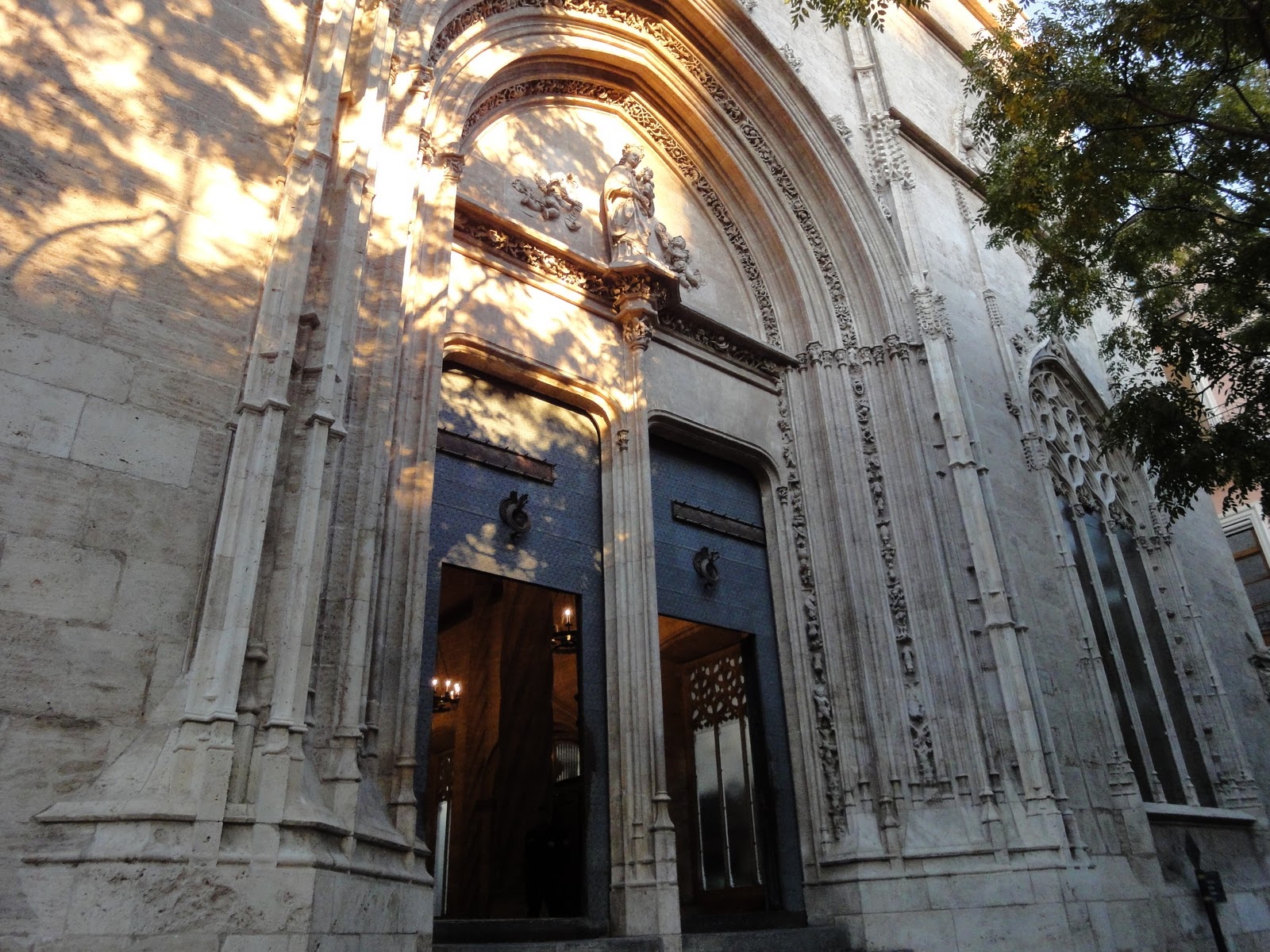
Known as La Llotja de la Seda in Valencian (La Lonja de la Seda in Spanish), this beautiful Gothic building in the centre of Valencia, built between 1482 and 1548, is a prime example of a medieval Gothic-style civil building in the Mediterranean region.


Nowadays, this remarkable building with trademark Gothic columns, gargoyles and a lush inner courtyard planted with orange tree, is one of Valencia's foremost tourist attractions. Originally a silk exchange for merchants based in Valencia, Lonja de la Seda was inscribed by UNESCO since 1996 as a World Heritage site due to is uniqueness as a purely civilan building built in the  Gothic style, an architectural style otherwise associated with ecclesiastical buildings in the Middle Ages and rarely used among civil buildings.


La Lonja is situated right across the street from Valencia's main mercado or central market. A plaque which commenorates the building's inscription as a UNESCO World Heritage site is erected next to the main entrance to La Lonja.