Showing posts with label Spain: Eastern Coast. Show all posts

Saturday, 19 March 2011

La Bodegueta, Valencia

One thing I came to realise after all these years of travel is, sometimes it really takes a bit of  luck and lots of instinct for any travellers to come across a place that serves authentic reional cuisines at reasonable prices. Although I sometimes do allow myself the luxury of having a proper meal at a renown restaurant (such as one of those honoured by the venerable Michelin guide), in general I am that sort of person who prefers to venture out into places where no tourists would frequent and try out whatever places that catch my attention.


Sometimes I came away from a city empty-handed, without having found anything which really impressed me. But then again, there are some places on earth that just seem to deliver a non-stop supply of such  rustic yet charming unknown little places with lots of local flavour.
Although Valencia is not very well-known outside of Europe as a top culinary destination, the city has an abundance of nice interesting little places all over the town, there is no shortage of decent foods wherever you go.
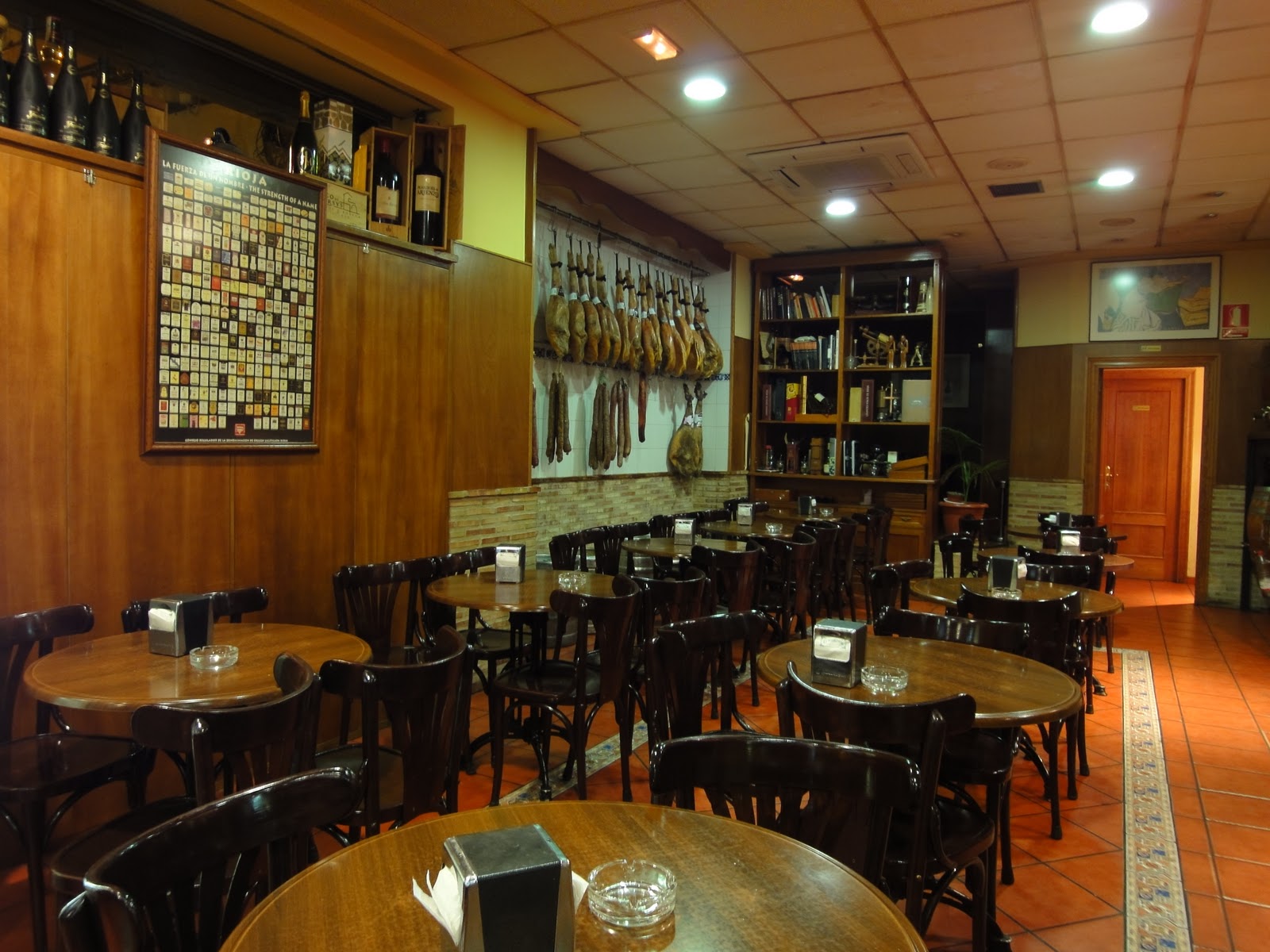

A golden rule of the thumb is, no matter which country you find yourself in, decent bistros almost always seem to congregate near where the university students are. There are several universities and institutes of higher educations in Valenica, and the area where I stayed at in the first week is full of cheap student and neighbourhood eateries offering delicious food and tapas for a few euros.

Wednesday, 16 March 2011

Barrio del Carmen, Valencia

I returned to visit Valencia once more after an absence of several years, and lots have changed in the city - for the better. This vibrant seaside city now has an efficient public transport system, lots of cultural and entertainment facilities, plenty of wonderful eating-places and restaurants, and after staying for one week in a newer neighbourhood in the university district of Valencia, I decided to prolong my stay and move to a more traditional part of town, within walking distance to Valencia's old medieval quarters and the city's beautiful botanical garden.


The monument of Torres de Quart, part of Valencia's medieval city walls and fortification system, is just a few minutes' walk from my rental flat. Once through the gate, you will find yourself  in the district of Barrio del Carmen, surrounded by medival churches, narrow streets, older buildings and lots of nice little tapas bars and restaurants.


During the day, this district might appear to some as somewhat quiet, although it has a very high concentration of resturants, cafes and bars. It is however famous for its night life, and as soon as the sun goes down, the streets and alleys of this part of Valencia immediately come into life.


Thursday, 10 March 2011

Illy Caffe in Valencia (2): L'Espresso @ Calle de la Paz

As said, there are several L'espresso cafe bars in Valencia, and this one on the busy shopping street of Calle de la Paz is a nice place to have a coffee break in the afternoon if you happen to be around the corner.


I like this place because of its large windows which offer plenty of natural lights into the cafe. Also the slightly dingy warmth of the ceiling lights offer a touch of radiance and intimacy to the whole interior. It seems like a good place for some serious discussions and small-talks.


Nice Little Places in Barrio del Carmen, Valencia: Taverna Cavallers

This little tavern is located on Calle Caballeros, near Valencia's medieval cathedral. I passed by this place in the afternoon, and decided to have a look that evening after dinner.


It is a small tapas bar which serves cold snacks, seafood tapas and other side dishes to go with wines and drinks. Since I am not fond of any seafood or fish, and my favourite artichoke tapas were not available, I settled for a cup of hot tea instead.


Wednesday, 9 March 2011

Nice Little Places in Barrio del Carmen, Valencia: Cafe y Bar Sant Jaume

There are many nice little places in Barrio del Carmen, and I came across this beautiful little cafe while on the way from Torres de Quart to the Cathedral of Valencia. The place is very small, less than a few square meters in total, but has a very original and authentic atmosphere.


As there are only two tables inside, most customers choose to have their drinks outside the bar underneath the trees instead. It seems this little place used to be a pharmacy of some sort, as the word 'pharmacy' could still be seen on the window above the side entrance. Even the wine shelves look very much like glass cabinets and cases specifically used to display and store bottles of lotions, solvents and medicines.


Tuesday, 8 March 2011

Illy Caffe in Valencia (1): L'Espresso

There are at least two L'espresso cafeterias in Valenica that serves good illy coffee, but the one located on a side street close to the Placa de l'Ajuntament is a good place to go to for some afternoon coffee with cakes, in part due to its central location, also because of the friendly staffs, although most of them speak Spanish only.


L'espresso is a cafeteria chain in Spain that offers the complete variety of Illy espresso products and all styles of Italian espresso. For instance, while not many Spaniards are familiar with how to make a latte macchiato or a Triestino, staffs at L'espresso can usually conjure up a good cup of one of these standard Italian fares at short notice.


Illy Caffe in Alicante: Cafeteria Il Duomo

An essential part of my holiday experience is to find a nice little place in every town and city I visited, which serves good Italian-style coffee made with illy coffee beans. And Alicante is no exception. As soon as I arrived at the city centre, I immediately set out for the search for a nice place to have my daily round of afternoon coffee.


Cafeteria Il Duomo is just a short distance away across the street opposite Alicante's famous central fresh-produce market, on the city's busy throughfare Alfonso el Sabio. The cafe is run by a friendly owner from Paraguy who attended coffee-brewing training and barista course at Illy's headquarters in Trieste, Italy.


Sunday, 6 March 2011

Valencia Revisited, Part Three: The Beach and Port America's Cup Marina

One thing which has puzzled me for quite sometime is, despite the presence of a beautiful beach in Valencia, it seems no one from outside of this city has taken notice of its existence. Unlike nearby Alicante and the Costa Blanca, where beaches are swamped with people in the summer and on weekends, the well-equipped and beautiful sandy white beach of Valencia has been somewhat 'devoid' of visitors. Which, of course, is a good news for people like me who prefer quiet, secluded beach spots to sites of popular tourist onslaughts witnessed elsewhere along the Costa Blanca.


The beach front promenade, which goes on for miles along the coastline, is planted with palms and evergreen scrubs. And rows of hotels with seaview rooms, cafes and elegant al fresco dining restaurants line the side of the boulevard facing the landscaped garden.


Saturday, 5 March 2011

Valencia Revisited, Part One: Ciutat de les Arts i les Ciències by Sanitago Calatrava and Felix Candela

In the last ten years, the municipality of Valencia has chosen to pump in huge amounts of money to re-develope certain less privileged parts of the city. The huge cultural and exhibition complex, Ciudad de las Artes y las Ciencias (City of Arts and Sciences), was a multi-million urban renewal project envisaged to provide a new lease of life to a previously neglected part of this fast-growing metropole.


The whole complex is built on the former river bed of the River Turia, which used to run through the centre of Valencia. Designed by renown Spanish architects Santiago Calatrava and Felix Candela, the entire park stretched for several kilometers and is now a popular weekend destination for locals and visitors alike. 


Fans of modernist architectural style would not be failed to be impressed by the bold, futuristic lines of the buildings of the City of Arts and Sciences. Being a native of Valencia, Santiago Calatrava rose to international prominence in the 1990s, following the success of his widely acclaimed design of the giant Montjuïc Communications Tower - also known as Torre Telefonica, a satellite and communications tower built for Spain's telecommunications company Telefonica - at the heart of Barcelona's Olympic Games ground. Nowadays the works of Calatrava can be found all over the world, from Europe to North America and beyond.


Friday, 4 March 2011

Valencia Revisited, Part Two: La Lonja de la Seda (Llotja de la Seda)

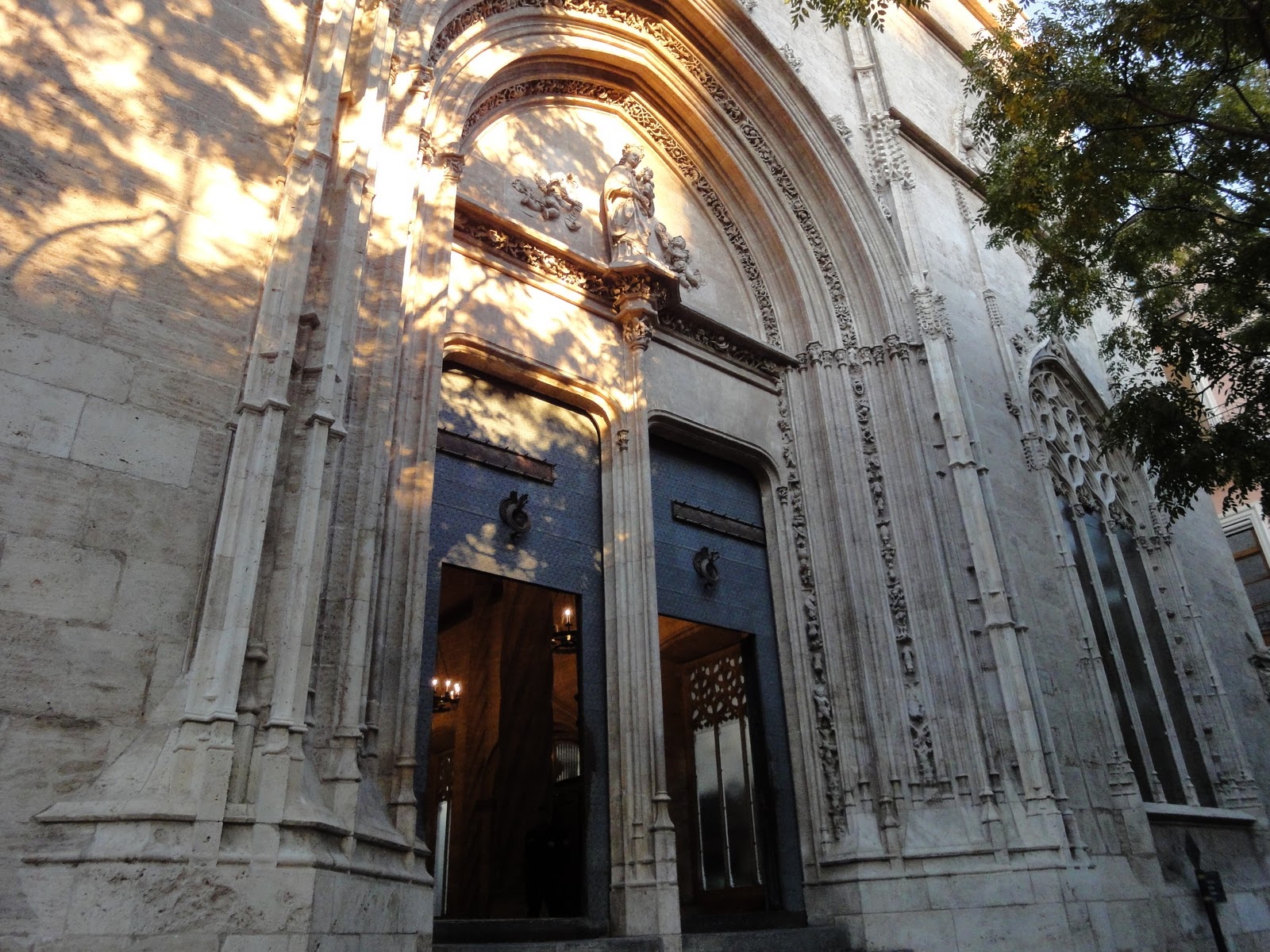
Known as La Llotja de la Seda in Valencian (La Lonja de la Seda in Spanish), this beautiful Gothic building in the centre of Valencia, built between 1482 and 1548, is a prime example of a medieval Gothic-style civil building in the Mediterranean region.


Nowadays, this remarkable building with trademark Gothic columns, gargoyles and a lush inner courtyard planted with orange tree, is one of Valencia's foremost tourist attractions. Originally a silk exchange for merchants based in Valencia, Lonja de la Seda was inscribed by UNESCO since 1996 as a World Heritage site due to is uniqueness as a purely civilan building built in the  Gothic style, an architectural style otherwise associated with ecclesiastical buildings in the Middle Ages and rarely used among civil buildings.


La Lonja is situated right across the street from Valencia's main mercado or central market. A plaque which commenorates the building's inscription as a UNESCO World Heritage site is erected next to the main entrance to La Lonja.

Monday, 28 February 2011

Journey along the Eastern Coast of Spain Part I: Tarragona

I was looking for a place to break my journey between Barcelona and Valencia, and Tarragona seems to be the ideal place for me to spend a night. About one-and-a-half hour away by bus from Barcelona's El Prat airport, direct bus service links the gateway to Barcelona with several renown coastal resort towns such as Tarragona, Reus, Salou, and Cambrils. 


The bus from Barcelona El Prat airport leaves from the bus station in front of Terminal One and arrives at Tarragona's main bus station, situated at the centre of  Tarragona. From the bus station, it is a 20-minutes walk uphills along the main throughfare of the city - Rambla Nova - to the Old Town of Tarragona, where most of the city's tourist attractions are.


Thursday, 24 February 2011

Journey along the Eastern Coast of Spain Part IV: Alicante

The very name of Alicante has long been synomonous to perfect sun, flawless beach, mildeclimes, and warm blue sea. This place has been on my target list of 'must-see' places in Spain for years, but strangely enough, in spite of the easy availability of budget flights from all over Europe to Alicante, and despite the fact that I had already visited some really out-of-way, even obscure places in Spain, it was not until recently that I finally had the opportunity to visit Alicante.


So Alicante and its famed beach, here I come!!

Wednesday, 23 February 2011

Journey along the Eastern Coast of Spain Part III: Calp/Calpe

After spending several leisurely days in Valenica, I decided to head along the coast towards the direction of Alicante. My initial plan was to go straight to Alicante by train, but as I opened the map and study the route, I thought the journey would be more interesting if I take a slight detour and take a look at some of the world-renown coastal resort towns on the Costa Blanca before arriving at Alicante.


The unusal sounding name Calp in Valencian (Calpe in Spanish) caught my attention. It sounds interesting, like some kind of seashells. And it seems the place is not as touristic or overcrowded as nearby Benidorm. After a brief research on the internet, I went to Valencia's bus station and bought a ticket to Calpe.


Journey along the Eastern Coast of Spain Part V: Murcia

With all its honey-coloured stone houses and grand cathedrals, Murcia is actually a very picturesque and sweet city. About two hours by train from Alicante, this little inland city offers some interesting sights, most notably its medieval Cathedral and its arrays of Spanish Baroque houses. Known for its mild climates in winter, Murcia is a good place to spend a few days in the sun if you happen to find yourself touring around the south-eastern coast of Spain.


The beautiful town hall of Murcia lies right on the bank of the Segura River, close to the Puente de los Peligros, a 18th century bridge and the oldest bridge in Murcia. Just like in neighbouring Cathargena, metal sculptures of fish can be seen 'swimming around' in the river.


Monday, 21 February 2011

Journey along the Eastern Coast of Spain Part VI: Cartagena

Cartagena - this name always reminds me of Carthage, the once significant maritime power whose sphere of influence stretched all the way from northern African coast (modern day Tunisia, parts of the coast of Libya, Morroco, and Algeria) to southern Spain, the Belares Islands, as well as Sardinia, Corsica and parts of the island of Sicily.


Founded by a Carthaginian general in 228 BC, the city of Carthagena has been long an important naval base throughout its long history due to its strategic location and the natural deep-water harbour. The town is now the main military seaport of the Spanish Navy, and is home to a big naval shipyard and a regular port-of-call of several renown cruise lines.